








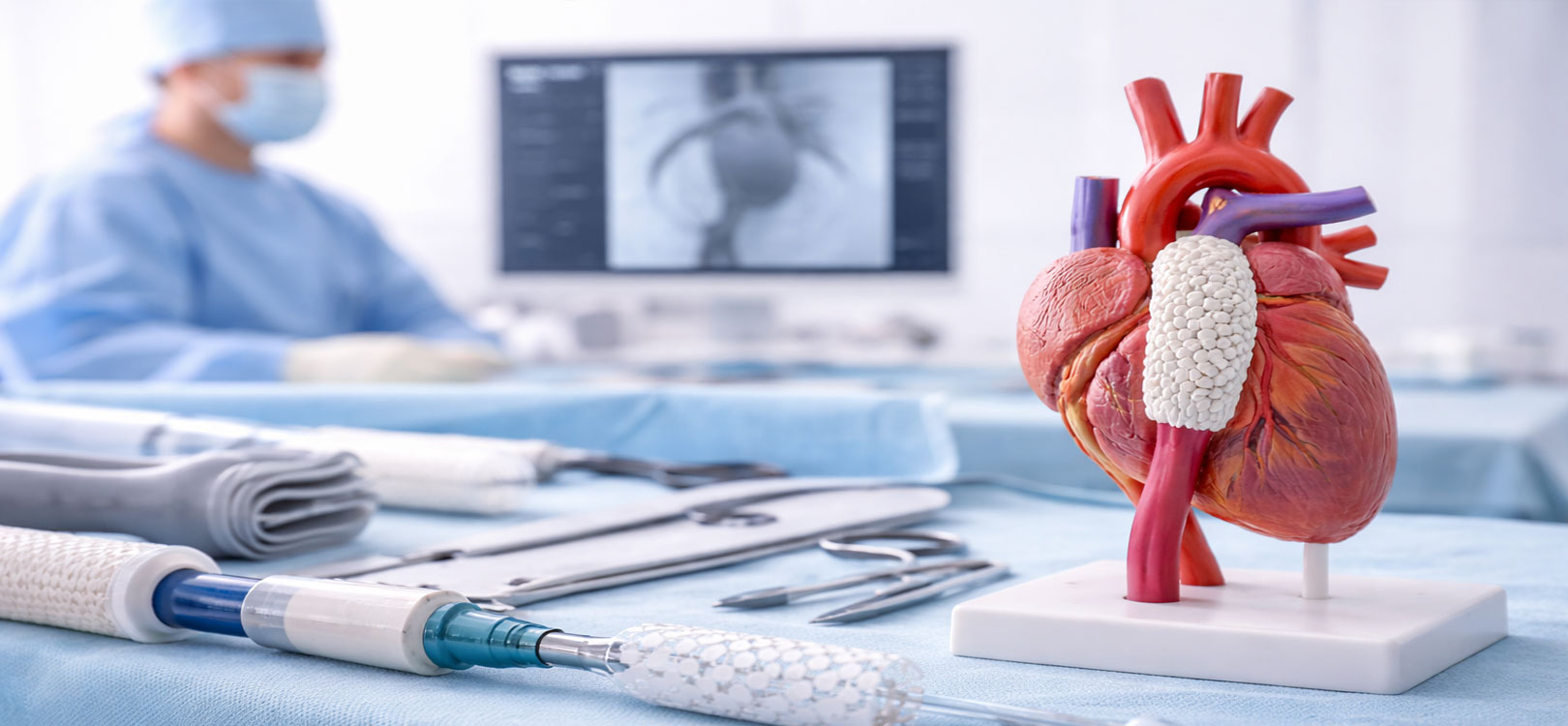
Aortic therapies focus on the diagnosis and treatment of diseases affecting the aorta, the largest artery in the human body. Conditions such as aortic aneurysms, aortic dissections, and aortic valve-related complications can significantly affect blood flow and overall cardiovascular health. Modern aortic therapies combine advanced imaging, surgical expertise, and minimally invasive techniques to repair or replace damaged portions of the aorta. These treatments help prevent life- threatening complications and restore proper circulation throughout the body.
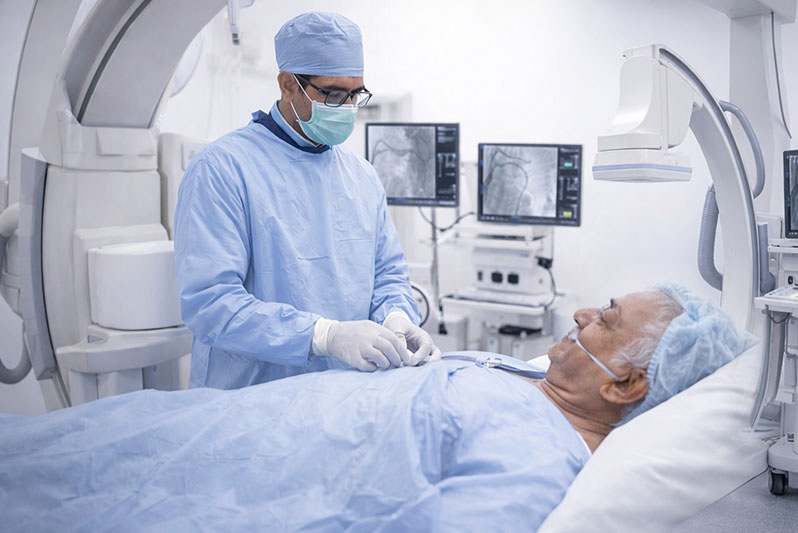
Our cardiovascular specialists provide comprehensive evaluation and treatment for aortic diseases using modern surgical and catheter-based approaches. With the help of advanced imaging technologies and minimally invasive procedures, patients receive safer treatments, faster recovery, and improved long-term outcomes.
- Diagnosis and management of thoracic and abdominal aortic aneurysms.
- Minimally invasive endovascular aneurysm repair (EVAR) and thoracic endovascular repair (TEVAR).
- Treatment for aortic dissections and complex aortic conditions.
- Advanced imaging techniques for accurate diagnosis and surgical planning.
Who needs Aortic Therapies?
Aortic therapies are recommended for patients diagnosed with conditions such as aortic aneurysms, aortic dissections, or other structural abnormalities affecting the aorta. These conditions can weaken the artery wall and may lead to serious complications if not treated promptly. Early detection through imaging tests and timely medical intervention can significantly reduce the risk of rupture and improve survival rates. Our specialists develop personalized treatment plans to ensure the best outcomes for every patient.
An aortic aneurysm is a bulging or enlargement of the aorta caused by weakness in the artery wall. If untreated, it may rupture and lead to serious complications.
Treatments include open surgical repair and minimally invasive endovascular procedures such as EVAR or TEVAR depending on the location and size of the aneurysm.
Minimally invasive procedures reduce surgical trauma, shorten hospital stays, lower complication risk, and allow faster patient recovery.
Doctors use imaging tests such as CT scans, echocardiography, MRI, and ultrasound to detect and evaluate aortic conditions.
You can schedule an appointment with our cardiovascular specialists for evaluation and personalized treatment planning for aortic diseases.
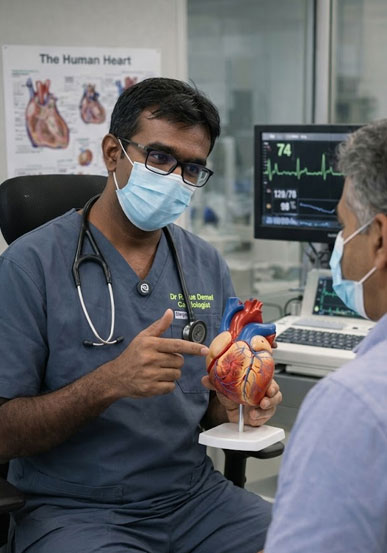
Emergency Cardiac Care 24/7
Our cardiovascular specialists provide advanced diagnostic and treatment services for aortic diseases including aneurysm repair and minimally invasive aortic interventions.